

2026年最新ののMicrosoft DP-420問題集PDFDP-420最速合格したいならここ
DP-420練習試験問題集で99%合格率Microsoft試験合格させます
Microsoft DP-420認定試験は、Microsoft Azure Cosmos DBを使用してクラウドネイティブアプリケーションの設計と実装の専門知識を証明したい専門家向けに設計されています。この試験は、Azureプラットフォームでスケーラブルで高度に利用可能なアプリケーションを構築するスキルを実証したい開発者、建築家、およびIT専門家に最適です。この認定により、専門家は、NOSQLデータベース機能、マルチモデルデータサポート、グローバル配信など、Azure Cosmos DBの機能についての理解を示すことができます。
質問 # 69
You are creating a database in an Azure Cosmos DB Core (SQL) API account. The database will be used by an application that will provide users with the ability to share online posts. Users will also be able to submit comments on other users' posts.
You need to store the data shown in the following table.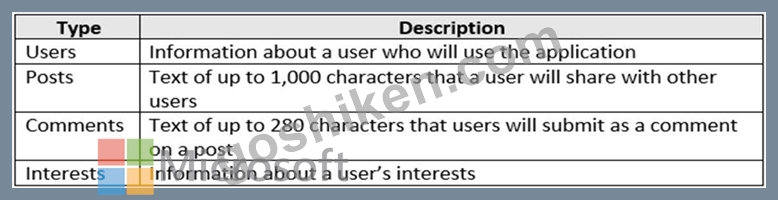
The application has the following characteristics:
Users can submit an unlimited number of posts.
The average number of posts submitted by a user will be more than 1,000.
Posts can have an unlimited number of comments from different users.
The average number of comments per post will be 100, but many posts will exceed 1,000 comments.
Users will be limited to having a maximum of 20 interests.
For each of the following statements, select Yes if the statement is true. Otherwise, select No.
NOTE: Each correct selection is worth one point.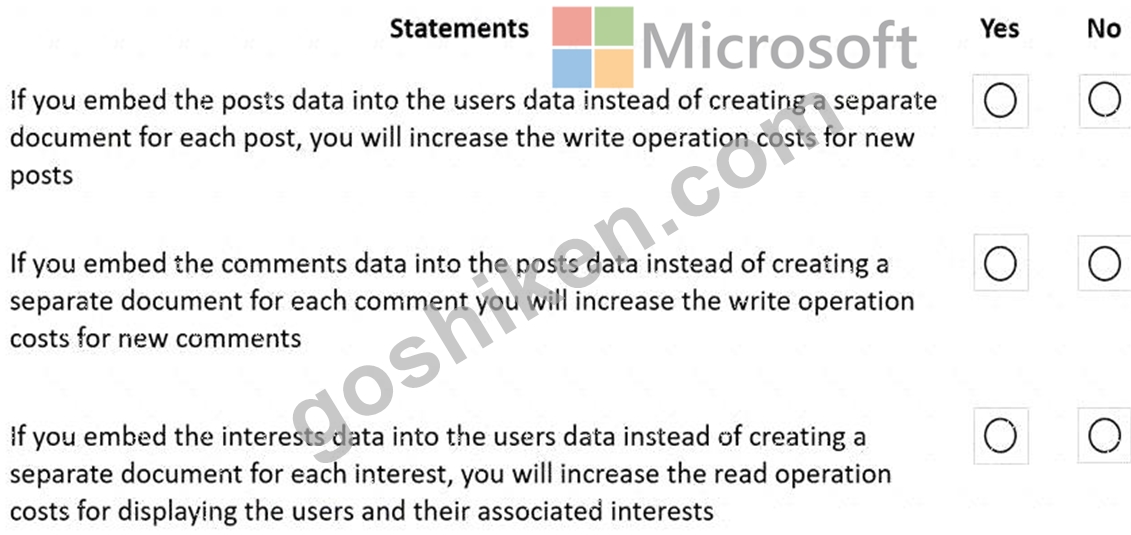
正解:
解説: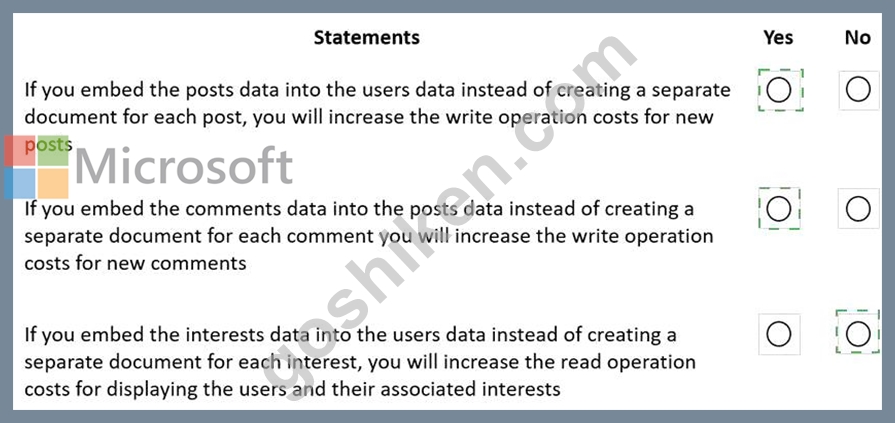
Explanation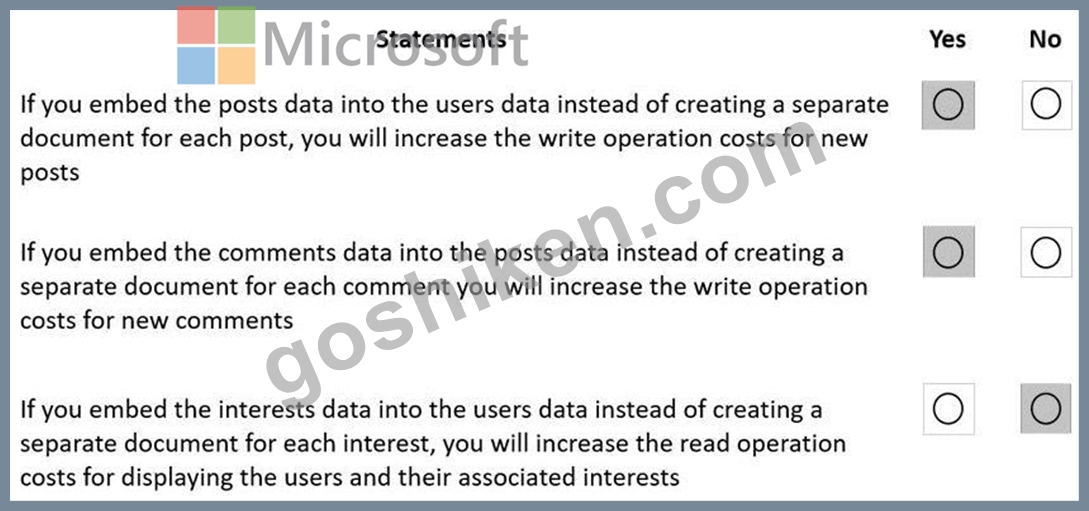
Box 1: Yes
Non-relational data increases write costs, but can decrease read costs.
Box 2: Yes
Non-relational data increases write costs, but can decrease read costs.
Box 3: No
Non-relational data increases write costs, but can decrease read costs.
質問 # 70
You are developing an application that will use an Azure Cosmos DB Core (SQL) API account as a data source.
You need to create a report that displays the top five most ordered fruits as shown in the following table.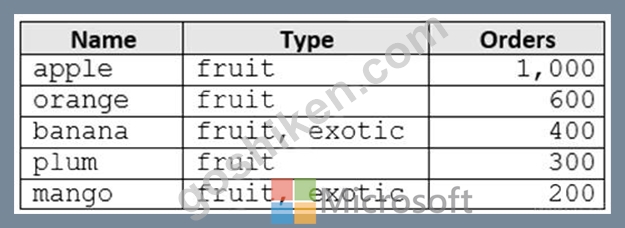
A collection that contains aggregated data already exists. The following is a sample document:
{
"name": "apple",
"type": ["fruit", "exotic"],
"orders": 10000
}
Which two queries can you use to retrieve data for the report? Each correct answer presents a complete solution.
NOTE: Each correct selection is worth one point.
- A.

- B.

- C.

- D.

正解:A、C
解説:
ARRAY_CONTAINS returns a Boolean indicating whether the array contains the specified value. You can check for a partial or full match of an object by using a boolean expression within the command.
Reference: https://docs.microsoft.com/en-us/azure/cosmos-db/sql/sql-query-array-contains
質問 # 71
You have a database in an Azure Cosmos DB for NoSQL account that is configured for multi-region writes.
You need to use the Azure Cosmos DB SDK to implement the conflict resolution policy for a container. The solution must ensure that any conflict sent to the conflict feed.
Solution: You set ConfilictResolutionMode to Custom. You Set ResolutionProcedures to a custom stored procedure. You configure the custom stored procedure to use the isTomstone parameter to resolve conflict.
Does this meet the goal?
- A. Yes
- B. No
正解:A
解説:
The solution is incorrect because there is no "isTom" parameter in the Azure Cosmos DB SDK. The correct parameter is "isTombstone".
質問 # 72
Note: This question is part of a series of questions that present the same scenario. Each question in the series contains a unique solution that might meet the stated goals. Some question sets might have more than one correct solution, while others might not have a correct solution.
After you answer a question in this section, you will NOT be able to return to it. As a result, these questions will not appear in the review screen.
You have a container named container1 in an Azure Cosmos DB Core (SQL) API account.
You need to make the contents of container1 available as reference data for an Azure Stream Analytics job.
Solution: You create an Azure Data Factory pipeline that uses Azure Cosmos DB Core (SQL) API as the input and Azure Blob Storage as the output.
Does this meet the goal?
- A. No
- B. Yes
正解:A
解説:
Explanation
Instead create an Azure function that uses Azure Cosmos DB Core (SQL) API change feed as a trigger and Azure event hub as the output.
The Azure Cosmos DB change feed is a mechanism to get a continuous and incremental feed of records from an Azure Cosmos container as those records are being created or modified. Change feed support works by listening to container for any changes. It then outputs the sorted list of documents that were changed in the order in which they were modified.
The following diagram represents the data flow and components involved in the solution:
Reference: https://docs.microsoft.com/en-us/azure/cosmos-db/sql/changefeed-ecommerce-solution
質問 # 73
You have an Azure Cosmos DB container named container! that has a provisioned throughput and two physical partitions. You monitor the following metrics for container1
* Normalized RU consumption
* The percentage of requests that have an HTTP status code of 429
You need to confirm that container1 is configured to maximize resource utilization.
What are the optimal values for each metric? To answer, select the appropriate options in the answer area.
NOTE: Each correct selection is worth one point.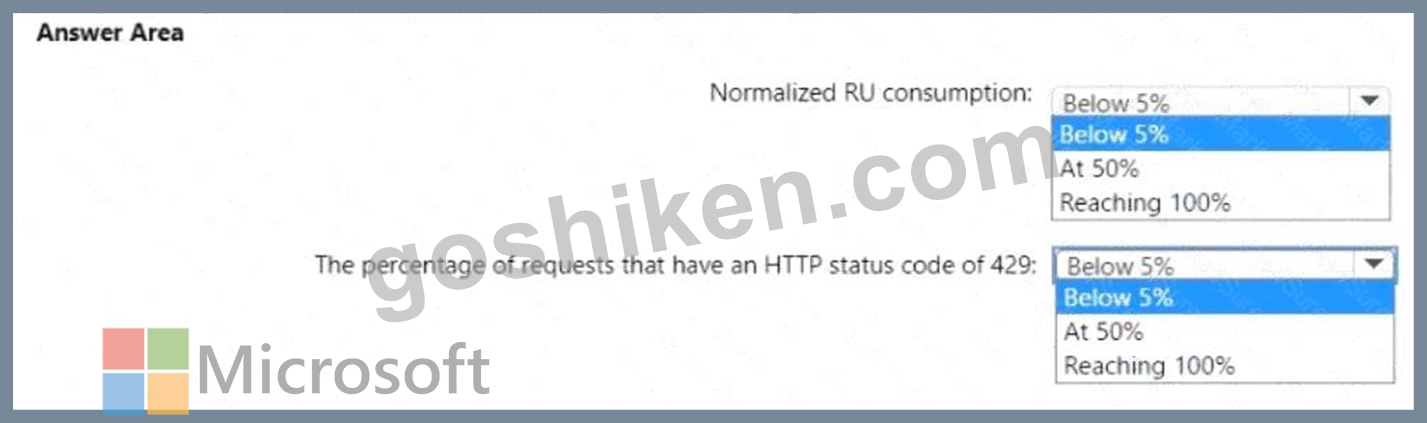
正解:
解説: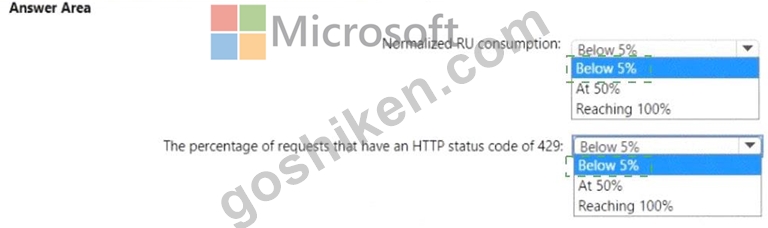
Explanation:
質問 # 74
You have an Azure subscription that contains an Azure Cosmos DB for NoSQL account named accounts You configure account! to send resource logs to Log Analytics.
You need to identify any containers in account1 that were deleted during the past 24 hours.
How should you complete the query? To answer, select the appropriate options in the answer area.
NOTE: Each correct selection is worth one point.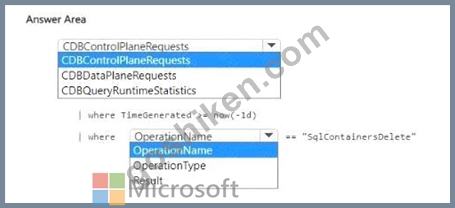
正解:
解説: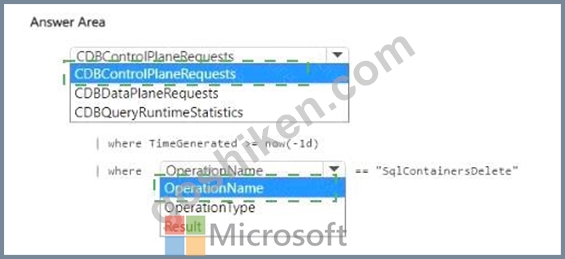
Explanation: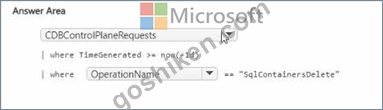
質問 # 75
You have an Azure Cosmos DB Core (SQL) API account that is configured for multi-region writes. The account contains a database that has two containers named container1 and container2.
The following is a sample of a document in container1:
{
"customerId": 1234,
"firstName": "John",
"lastName": "Smith",
"policyYear": 2021
}
The following is a sample of a document in container2:
{
"gpsId": 1234,
"latitude": 38.8951,
"longitude": -77.0364
}
You need to configure conflict resolution to meet the following requirements:
For container1 you must resolve conflicts by using the highest value for policyYear.
For container2 you must resolve conflicts by accepting the distance closest to latitude: 40.730610 and longitude: -73.935242.
Administrative effort must be minimized to implement the solution.
What should you configure for each container? To answer, drag the appropriate configurations to the correct containers. Each configuration may be used once, more than once, or not at all. You may need to drag the split bar between panes or scroll to view content.
NOTE: Each correct selection is worth one point.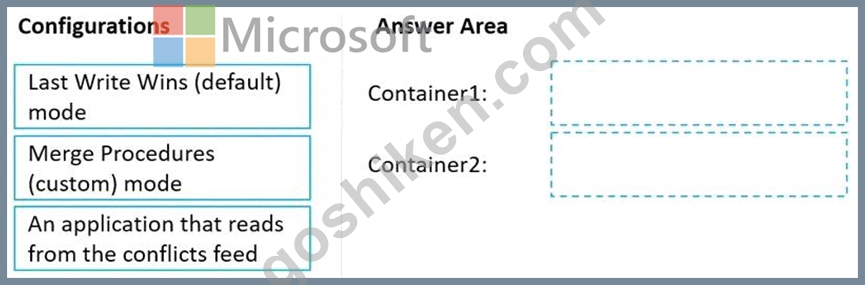
正解:
解説: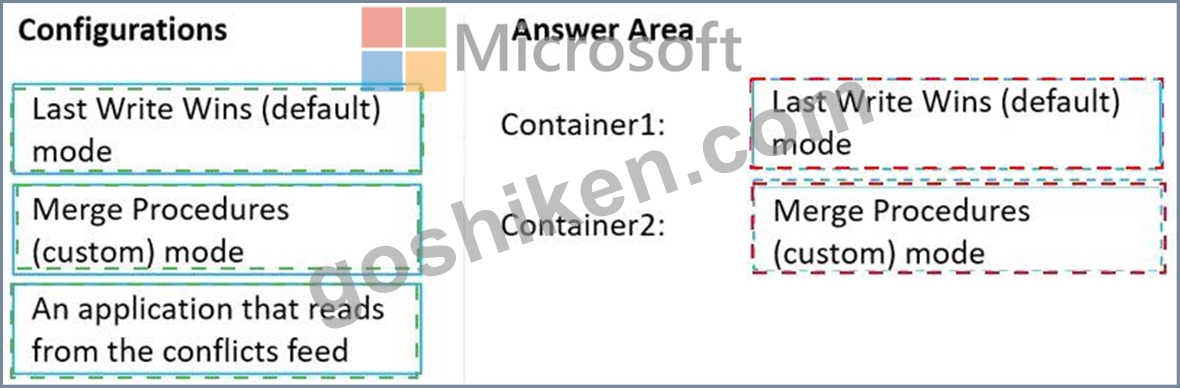
Explanation: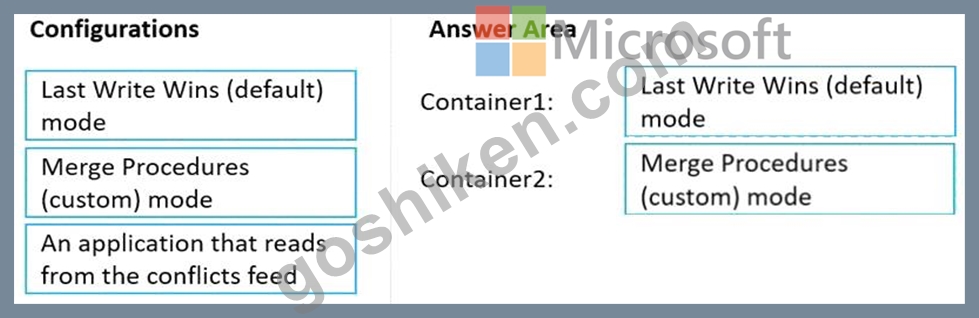
Box 1: Last Write Wins (LWW) (default) mode
Last Write Wins (LWW): This resolution policy, by default, uses a system-defined timestamp property. It's based on the time-synchronization clock protocol.
Box 2: Merge Procedures (custom) mode
Custom: This resolution policy is designed for application-defined semantics for reconciliation of conflicts.
When you set this policy on your Azure Cosmos container, you also need to register a merge stored procedure.
This procedure is automatically invoked when conflicts are detected under a database transaction on the server. The system provides exactly once guarantee for the execution of a merge procedure as part of the commitment protocol.
Reference:
https://docs.microsoft.com/en-us/azure/cosmos-db/conflict-resolution-policies
https://docs.microsoft.com/en-us/azure/cosmos-db/sql/how-to-manage-conflicts
質問 # 76
You have an Azure Cosmos DB for NoSQL account.
You plan 10 create a container named container1. The container1 container will store items that include two properties named nm and age The most commonly executed queries will query container1 for a specific name. The following is a sample of the query.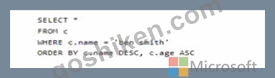
You need to define an opt-in Indexing policy for container1. The solution must meet the following requirements:
* Minimize the number of request units consumed by the queries.
* Ensure that the _etag property is excluded from indexing.
How should you define the indexing poky? To answer, select the appropriate options in the answer are a. NOTE: Each correct selection Is worth one point.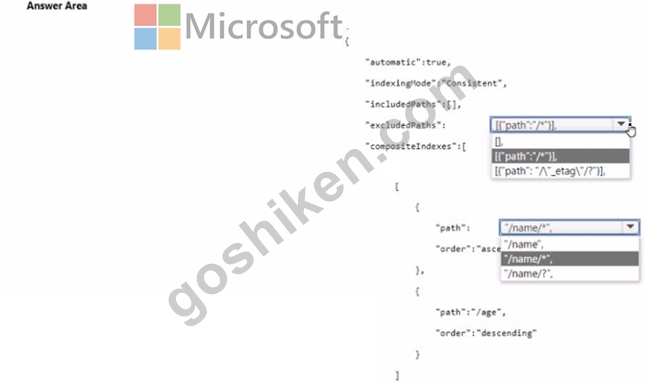
正解:
解説: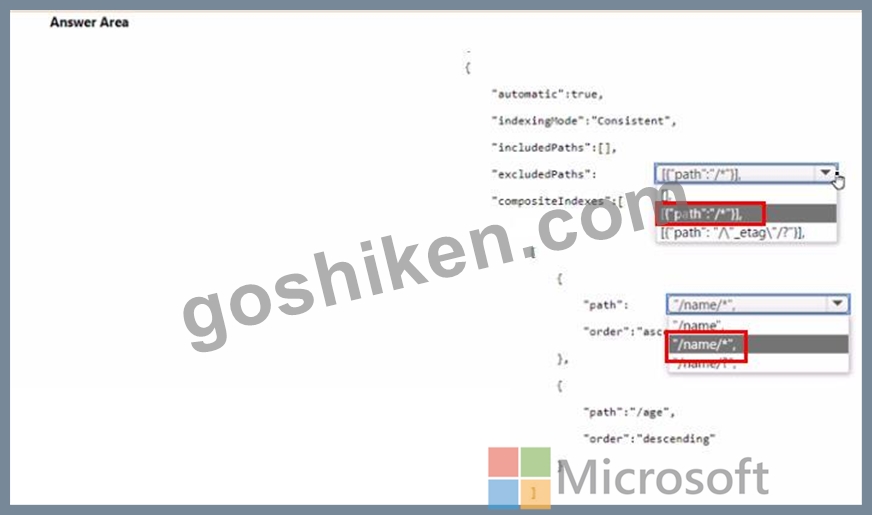
質問 # 77
You have an Azure Cosmos DB Core (SQL) API account that is configured for multi-region writes. The account contains a database that has two containers named container1 and container2.
The following is a sample of a document in container1:
{
"customerId": 1234,
"firstName": "John",
"lastName": "Smith",
"policyYear": 2021
}
The following is a sample of a document in container2:
{
"gpsId": 1234,
"latitude": 38.8951,
"longitude": -77.0364
}
You need to configure conflict resolution to meet the following requirements:
For container1 you must resolve conflicts by using the highest value for policyYear.
For container2 you must resolve conflicts by accepting the distance closest to latitude: 40.730610 and longitude: -73.935242.
Administrative effort must be minimized to implement the solution.
What should you configure for each container? To answer, drag the appropriate configurations to the correct containers. Each configuration may be used once, more than once, or not at all. You may need to drag the split bar between panes or scroll to view content.
NOTE: Each correct selection is worth one point.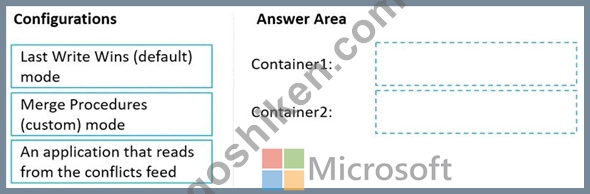
正解:
解説: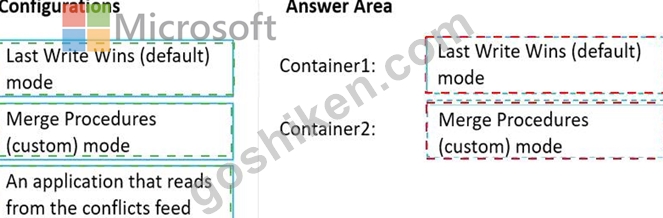
Explanation: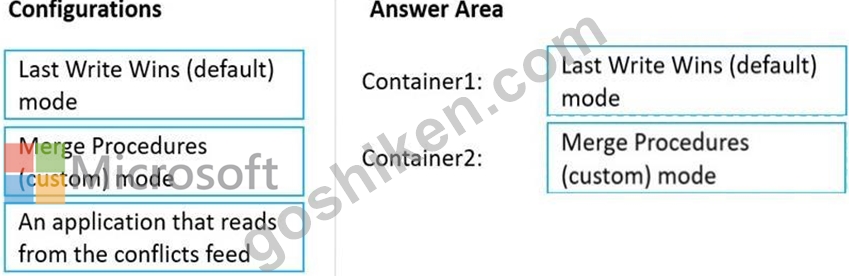
Box 1: Last Write Wins (LWW) (default) mode
Last Write Wins (LWW): This resolution policy, by default, uses a system-defined timestamp property. It's based on the time-synchronization clock protocol.
Box 2: Merge Procedures (custom) mode
Custom: This resolution policy is designed for application-defined semantics for reconciliation of conflicts.
When you set this policy on your Azure Cosmos container, you also need to register a merge stored procedure.
This procedure is automatically invoked when conflicts are detected under a database transaction on the server. The system provides exactly once guarantee for the execution of a merge procedure as part of the commitment protocol.
Reference:
https://docs.microsoft.com/en-us/azure/cosmos-db/conflict-resolution-policies
https://docs.microsoft.com/en-us/azure/cosmos-db/sql/how-to-manage-conflicts
質問 # 78
You have an Azure Cosmos DB for NoSQL account.
The change feed is enabled on a container named invoice.
You create an Azure function that has a trigger on the change feed.
What is received by the Azure function?
- A. only the partition key and the changed properties of the updated items
- B. only the changed properties and the system-defined properties of the updated items
- C. all the properties of the updated items
- D. all the properties of the original items and the updated items
正解:C
解説:
Explanation
According to the Azure Cosmos DB documentation , the change feed is a persistent record of changes to a container in the order they occur. The change feed outputs the sorted list of documents that were changed in the order in which they were modified.
The Azure function that has a trigger on the change feed receives all the properties of the updated items2. The change feed does not include the original items or only the changed properties. The change feed also includes some system-defined properties such as _ts (the last modified timestamp) and _lsn (the logical sequence number)3.
Therefore, the correct answer is:
A: all the properties of the updated items
質問 # 79
You need to provide a solution for the Azure Functions notifications following updates to con-product. The solution must meet the business requirements and the product catalog requirements.
Which two actions should you perform? Each correct answer presents part of the solution.
NOTE: Each correct selection is worth one point.
- A. Configure the trigger for each function to use a different leaseCollectionName
- B. Configure the trigger for each function to use a different leaseCollectionPrefix
- C. Configure the trigger for each function to use the same leaseCollectionNair.e
- D. Configure the trigger for each function to use the same leaseCollectionPrefix
正解:B、C
解説:
Explanation
leaseCollectionPrefix: when set, the value is added as a prefix to the leases created in the Lease collection for this Function. Using a prefix allows two separate Azure Functions to share the same Lease collection by using different prefixes.
Scenario: Use Azure Functions to send notifications about product updates to different recipients.
Trigger the execution of two Azure functions following every update to any document in the con-product container.
Reference:
https://docs.microsoft.com/en-us/azure/azure-functions/functions-bindings-cosmosdb-v2-trigger
質問 # 80
You plan to use a multi-region Azure Cosmos DB for NoSQL account to store data for a new application suite. The suite contains the applications shown in the following table.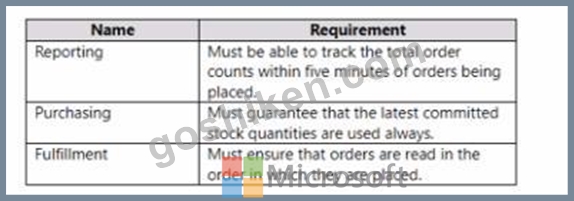
Each application should use the weakest consistency level possible.
Which consistency level should you configure for each application? To answer, select the appropriate options in the answer area. NOTE: Each correct selection is worth one point.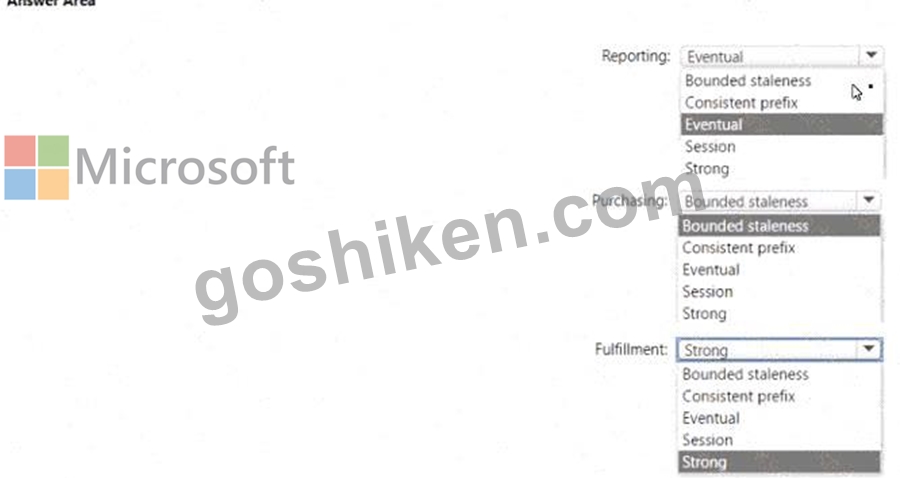
正解:
解説: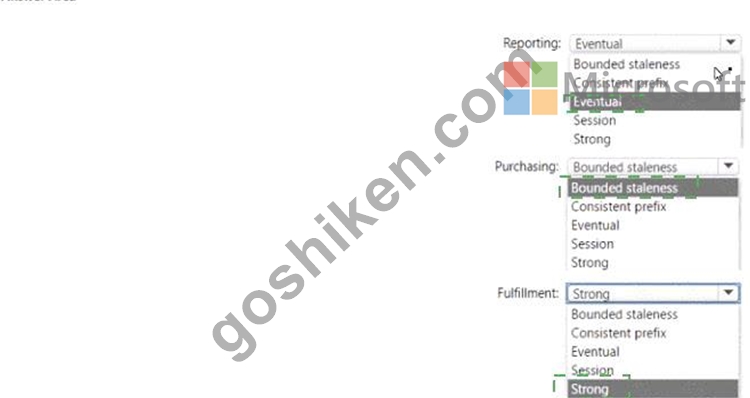
Explanation: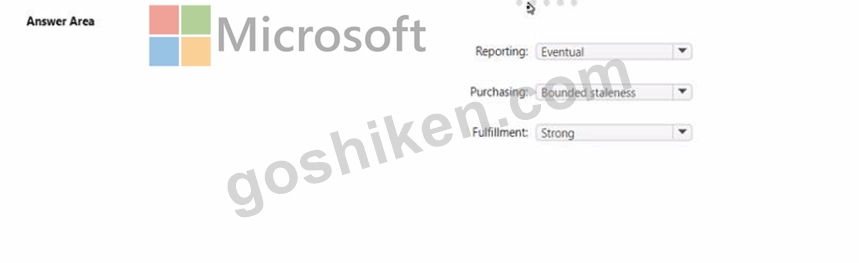
質問 # 81
Note: This question is part of a series of questions that present the same scenario. Each question in the series contains a unique solution that might meet the stated goals. Some question sets might have more than one correct solution, while others might not have a correct solution.
After you answer a question in this section, you will NOT be able to return to it. As a result, these questions will not appear in the review screen.
You have an Azure Cosmos DB Core (SQL) API account named account 1 that uses autoscale throughput.
You need to run an Azure function when the normalized request units per second for a container in account1 exceeds a specific value.
Solution: You configure an Azure Monitor alert to trigger the function.
Does this meet the goal?
- A. Yes
- B. No
正解:A
解説:
Explanation
You can set up alerts from the Azure Cosmos DB pane or the Azure Monitor service in the Azure portal.
Note: Alerts are used to set up recurring tests to monitor the availability and responsiveness of your Azure Cosmos DB resources. Alerts can send you a notification in the form of an email, or execute an Azure Function when one of your metrics reaches the threshold or if a specific event is logged in the activity log.
Reference: https://docs.microsoft.com/en-us/azure/cosmos-db/create-alerts
質問 # 82
You have a database in an Azure Cosmos DB Core (SQL) API account.
You need to create an Azure function that will access the database to retrieve records based on a variable named accountnumber. The solution must protect against SQL injection attacks.
How should you define the command statement in the function?
- A. cmd = "SELECT * FROM Persons p
WHERE p.accountnumber = @accountnumber" - B. cmd = "SELECT * FROM Persons p
WHERE p.accountnumber = LIKE @accountnumber" - C. cmd = "SELECT * FROM Persons p
WHERE p.accountnumber = '" + accountnumber + "'" - D. cmd = "SELECT * FROM Persons p
WHERE p.accountnumber = 'accountnumber'"
正解:A
解説:
Azure Cosmos DB supports queries with parameters expressed by the familiar @ notation. Parameterized SQL provides robust handling and escaping of user input, and prevents accidental exposure of data through SQL injection.
For example, you can write a query that takes lastName and address.state as parameters, and execute it for various values of lastName and address.state based on user input.
SELECT *
FROM Families f
WHERE f.lastName = @lastName AND f.address.state = @addressState
質問 # 83
You need to implement a trigger in Azure Cosmos DB Core (SQL) API that will run before an item is inserted into a container.
Which two actions should you perform to ensure that the trigger runs? Each correct answer presents part of the solution.
NOTE: Each correct selection is worth one point.
- A. Append pre to the name of the JavaScript function trigger.
- B. Register the trigger as a pre-trigger.
- C. For each create request, set the consistency level to session in RequestOptions.
- D. For each create request, set the access condition in RequestOptions.
- E. For each create request, set the trigger name in RequestOptions.
正解:A、B
解説:
C: When triggers are registered, you can specify the operations that it can run with.
F: When executing, pre-triggers are passed in the RequestOptions object by specifying PreTriggerInclude and then passing the name of the trigger in a List object.
質問 # 84
You have three containers in an Azure Cosmos DB Core (SQL) API account as shown in the following table.
You have the following Azure functions:
A function named Fn1 that reads the change feed of cn1
A function named Fn2 that reads the change feed of cn2
A function named Fn3 that reads the change feed of cn3
You perform the following actions:
Delete an item named item1 from cn1.
Update an item named item2 in cn2.
For an item named item3 in cn3, update the item time to live to 3,600 seconds.
For each of the following statements, select Yes if the statement is true. Otherwise, select No.
NOTE: Each correct selection is worth one point.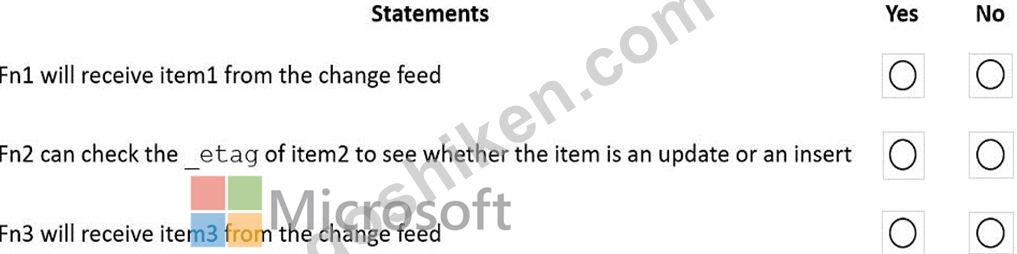
正解:
解説: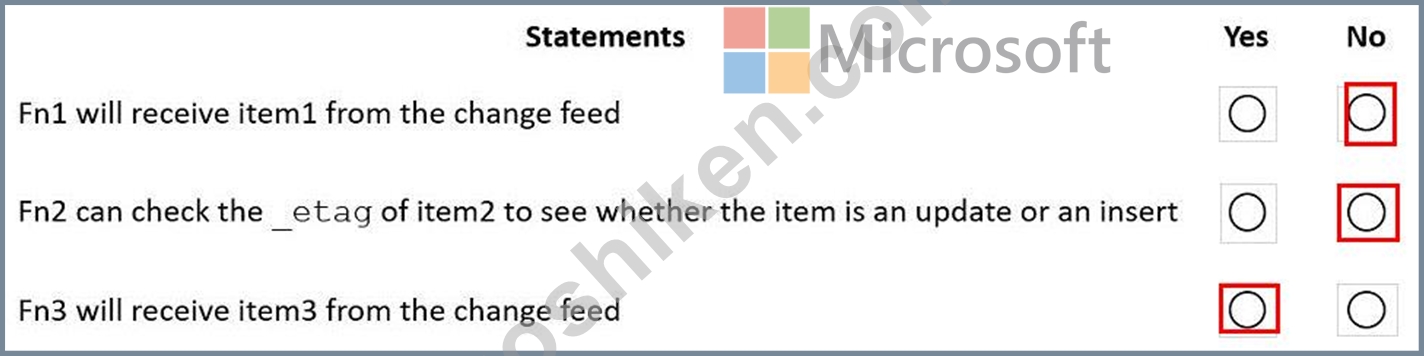
Reference:
https://docs.microsoft.com/en-us/azure/cosmos-db/sql/change-feed-design-patterns
https://docs.microsoft.com/en-us/azure/cosmos-db/change-feed
質問 # 85
You provision Azure resources by using the following Azure Resource Manager (ARM) template.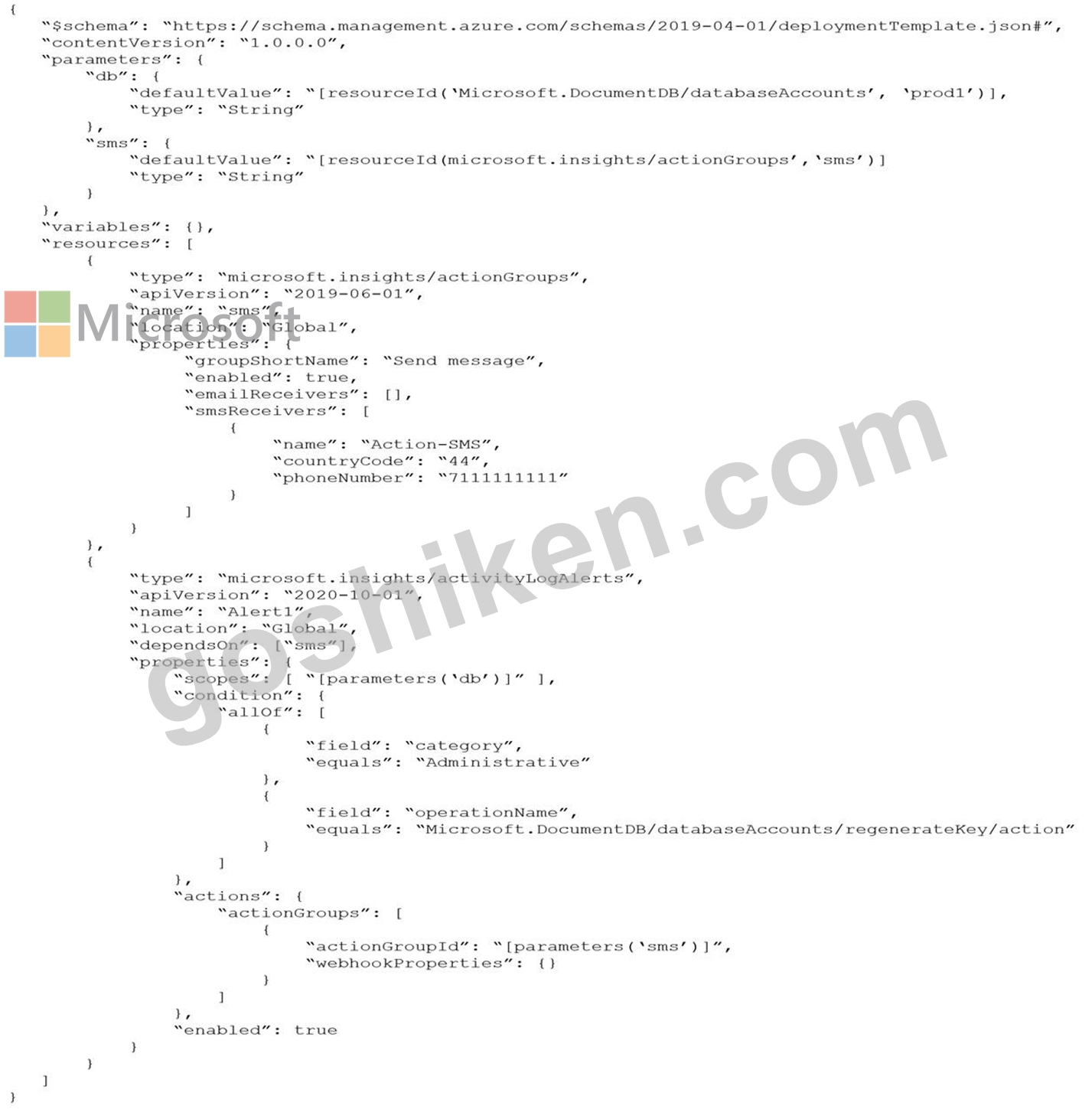
For each of the following statements, select Yes if the statement is true. Otherwise, select No.
NOTE: Each correct selection is worth one point.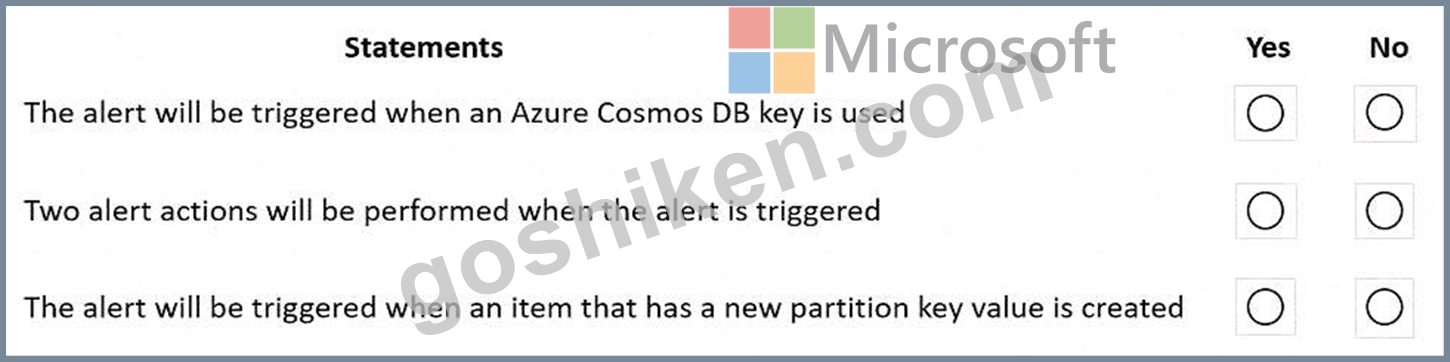
正解:
解説: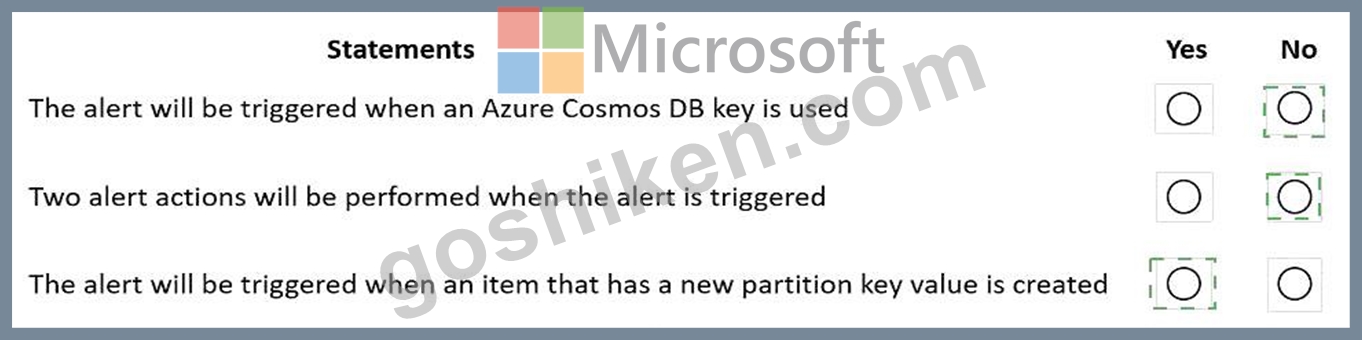
Explanation: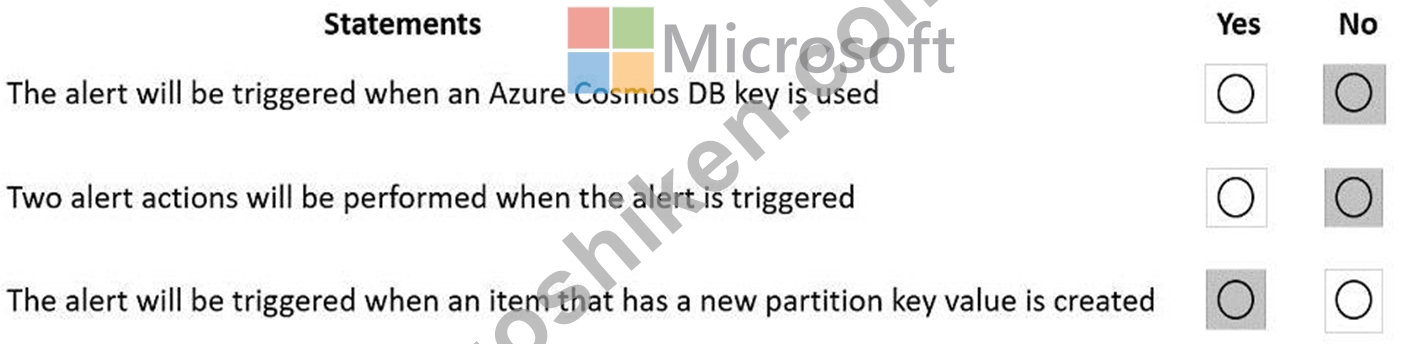
Box 1: No
An alert is triggered when the DB key is regenerated, not when it is used.
Note: The az cosmosdb keys regenerate command regenerates an access key for a Azure Cosmos DB database account.
Box 2: No
Only an SMS action will be taken.
Emailreceivers is empty so no email action is taken.
Box 3: Yes
Yes, an alert is triggered when the DB key is regenerated.
Reference: https://docs.microsoft.com/en-us/cli/azure/cosmosdb/keys
質問 # 86
......
この試験は、Azure Cosmos DBの機能、機能、および設計パターンを含む候補者の知識を検証します。また、データモデル設計、パーティショニング戦略、およびデータ整合性モデルを含むAzure Cosmos DBを使用したアプリケーションの設計と実装能力も試験されます。この試験では、Azure Cosmos DBを使用したクラウドネイティブアプリケーションの展開、監視、およびトラブルシューティングのベストプラクティスもカバーされます。
最新の検証済みDP-420問題と解答で合格保証:https://www.goshiken.com/Microsoft/DP-420-mondaishu.html
DP-420認証と実際の解答:https://drive.google.com/open?id=1tTpxai8jJ5hDr0KREcLkoif2kaqLfGzY