

NCC-NNP問題集最新版を今すぐ試そう![2026年08月] 試験準備には欠かせません!
有能な受験者がシミュレーション済みのNCC-NNP試験PDF問題を試そう
質問 # 46
The following drug(s) should always be included with infant resuscitation equipment
- A. surfactant and naloxone
- B. prostaglandin and epinephrine
- C. epinephrine and naloxone
正解:C
解説:
Medications that should always be included as part of the minimum neonatal resuscitation equipment include epinephrine and naloxone. Epinephrine is the AHA recommended pharmacologic intervention in the case of ineffective CPR in neonatal resuscitation. Naloxone is indicated in the case of respiratory distress in infants with opioid withdraw after the administrations of opioids as pain control in the labor process. Surfactant (indicated in respiratory distress, particularly in preterm neonates) and prostaglandins (indicated for cyanotic congenital heart defects) are useful in specific cases, but are not part of the minimum resuscitation equipment.
質問 # 47
Parents of a newborn have opted to not have their son circumcised. When providing them with care instructions, they will need to know
- A. though the circumcision was not done in the hospital, they will need to follow-up with their
- B. the child should receive an annual exam by a urologist to evaluate the uncircumcised penis
- C. The foreskin should only be retracted as much as it allows during bathing and diaper
正解:C
解説:
It is recommended that the newborn's foreskin be gently retracted as much as it will naturally allow during baths and diaper changes, but that cleansing the area beneath the foreskin not be done until the foreskin has fully retracted naturally. Forceful retraction should be avoided as it may cause irritation, bleeding, or fibrosis, and should be avoided for that reason. Bacteria, fungus, and moisture can be trapped within the foreskin, which can lead to a painful infection. Infections can become severe enough to cause significant swelling of the foreskin, which can prevent it from being able to be retracted down over the penis.
質問 # 48
A neonate born with the genetic disorder cystic fibrosis must be monitored carefully for
- A. apnea
- B. hypoglycemia
- C. meconium ileus
正解:C
解説:
Cystic fibrosis is a congenital disease associated with thick collection of mucous in the lungs and intestines. Up to a fifth of children born with cystic fibrosis have meconium ileus. Meconium ileus is obstruction of the ileum with inspissated (thick) mucilaginous meconium that clings to the side of the narrowed lumen of the intestine and forms hard pellets (usually the first clinical sign of cystic fibrosis). The mucus interferes with absorption of fat, protein, carbohydrates, and other nutrients, leading to malabsorption syndromes.
質問 # 49
During the initial physical examination, the neonate's chest circumference is 34 cm. The expected head circumference is
- A. 34 cm
- B. 36 cm
- C. 32 cm
正解:B
解説:
The head circumference is usually about 2 cm greater than the chest circumference, so the head circumference should be about 36 cm. Normal characteristics of a newborn include the following: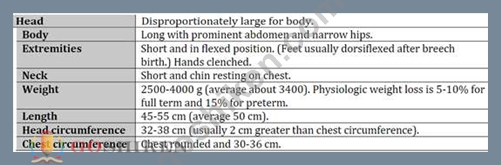
質問 # 50
An infant in the Neonatal Intensive Care Unit is being treated for meningitis with ampicillin. The dosage is 400 mg/kg/day divided over every 8 hours. The infant being cared for weighs 6 pounds 8 ounces. How many milligrams should be given with each dose?
- A. 325 mg
- B. 393 mg
- C. 300 mg
正解:B
解説:
To calculate the correct dosage, the first step will be to convert the weight to kilograms. 6 pounds 8 ounces, or 6.5 pounds, is divided by 2.2 to convert the weight to 2.95 kg. The dosage is
400 mg/kg/day so in a full day, the infant should receive 1,180 mg (400 x 2.95 = 1,180). The dosage is spaced three times a day, every 8 hours, so each dosage should be 393 mg (1,180/3 = 393).
質問 # 51
An infant with ABO incompatibility with the mother develops hyperbilirubinemia after birth. The neonate should be monitored for a few weeks after birth for
- A. congestive heart failure
- B. anemia
- C. kernicterus
正解:B
解説:
Anemia may develop in the weeks after delivery because of increased rate of RBC breakdown, so the neonate should be monitored with blood counts. About 20-25% of pregnancies involve ABO incompatibility, usually with the mother type O and the fetus A or B. There are rarely serious complications for the fetus although the neonate may develop hyperbilirubinemia, so the child should be observed carefully. Only in severe cases of hemolysis (rare), does the child require exchange transfusions.
質問 # 52
What is the difference between an omphalocele and a gastroschisis?
- A. An omphalocele is a fluid collection in the abdomen, while a gastroschisis is a decrease in
- B. An omphalocele occurs when the abdominal contents protrude through the umbilicus, buta
- C. An omphalocele occurs when the brain ventricles are dilated, while a gastroschisis occurs
正解:B
解説:
Omphalocele is a condition in which there is an opening at the umbilicus through which the abdominal organs can protrude. A gastroschisis occurs when all of the abdominal organs are exposed because the outer membrane does not form over the abdomen to cover them. Both of these are congenital defects that occur early in development. The abdominal organs usually form outside the abdomen, but then return to the abdomen during development. There is no definitive known cause for either condition.
質問 # 53
What does it mean if a disease is autosomal dominant?
- A. One parent needs to pass on the gene for the disease to occur.
- B. Neither parent passes on the gene for the disease to occur; itis a genetic mutation that occurs during fetal development.
- C. Both parents need to pass on the gene for the disease to occur.
正解:A
解説:
An autosomal dominant disorder only requires one parent to pass on the gene for a disease to occur. Examples of autosomal dominant conditions including Huntington's disease, polycystic kidney disease, and neurofibromatosis. Often, one of the parents will have the disease and can pass it onto their children.
質問 # 54
When the NP is assessing a newborn's respiratory status, which would indicate the newborn is developing respiratory distress?
- A. Respiratory rate of 40 breaths per minute
- B. Pink skin color
- C. Nasal flaring
正解:C
解説:
Nasal flaring is seen in newborns as an attempt to widen the nares and take in more oxygen.
Other signs of respiratory distress include retractions, tachypnea, grunting, and abnormal breath sounds. Pink skin color is reflective of a health newborn with good perfusion. A respiratory rate of
40 breaths per minute is within the normal range for a newborn.
質問 # 55
When evaluating cord blood values 30 minutes after birth, the following arterial POZ is within normal limits
- A. 40-50 mmHg
- B. 28-32 mmHg
- C. 16-20 mmHg
正解:C
解説:
Umbilical cord blood gas testing, preferably arterial, should be done minutes after birth for infants who are at risk or depressed to determine pH and acid-base balance. Testing is most applicable to infants with low APGAR scores (0-3) persisting for 25 minutes. Normal values: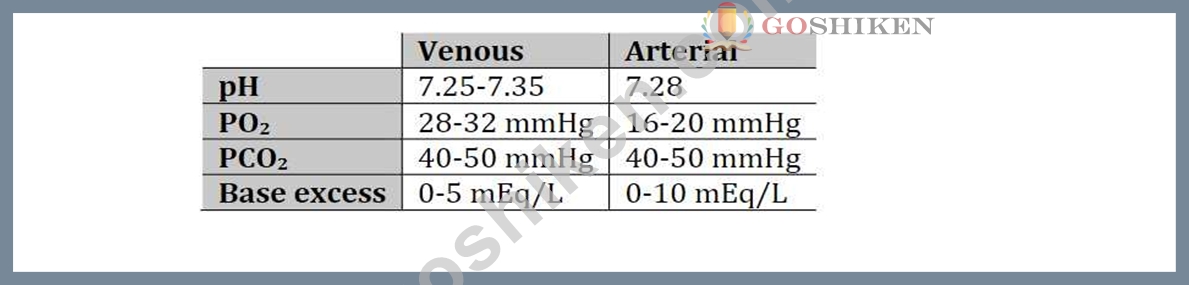
質問 # 56
The feces of house cats can cause a parasitic infection called
- A. giardia
- B. toxoplasmosis
- C. shigella
正解:B
解説:
Cat feces can contain a parasite called toxoplasmosis. A pregnant woman may contract this parasite and then pass it onto the fetus through the placenta. For this reason, pregnant women should avoid contact with cat feces, such as when cleaning a litter box. Most pregnant women who become infected will not be aware of the infection. It can cause prematurity in about half of those infants who contract the parasite in utero. The infection can cause damage to the eyes, ears, nervous system, and skin in infants,
質問 # 57
What injection do newborns receive at birth to decrease the risk of hemorrhage?
- A. Vitamin K
- B. Vitamin A
- C. Erythromycin
正解:A
解説:
At birth, newborns are given an injection of vitamin K to prevent hemorrhage. Infants are borne with a deficient amount of vitamin K, which can cause a condition known as vitamin K deficiency bleeding, or VKDB. Internal bleeding can be difficult in the newborn until serious complications are developing. so a routine injection of vitamin K is given at birth to decrease the risk of bleeding. Erythromycin ointment is applied to the eyes of the newborn to prevent neonatal gonococcal ophthalmia.
質問 # 58
A neonate exhibits the following:
*Long narrow torso with short arms and legs.
*Proximal segment of the limbs (upper arms and thighs) disproportionately short.
*Head large with frontal bossing and midface hypoplasia.
These characteristics are consistent with
- A. fragile X
- B. achondroplasia
- C. Down syndrome
正解:B
解説:
Achondroplasia is the most common cause of dwarfism. Bone growth is inhibited as the result of an abnormal gene on chromosome 4. Achondroplasia can be inherited in an autosomal dominant fashion, but the majority of cases (75-80%) occur with spontaneous mutations. Clinical features apparent at birth include a long narrow torso with short arms and legs. The proximal segment of the limbs (upper arms and thighs) is disproportionately short. The head is large, with frontal bossing and midface hypoplasia. A small hump (gibbus) may be present in the mid-to-lower back. Mild, generalized hypotonia may be present.
質問 # 59
A neonate develops early-onset bacterial meningitis. Typical early symptoms include
- A. temperature instability, lethargy, poor feeding, and hypotension
- B. hyperthermia, lethargy, nuchal rigidity
- C. bulging fontanels, seizures, nuchal rigidity
正解:A
解説:
Meningitis is often difficult to diagnose in the neonate because it has early nonspecific clinical findings of irritability, lethargv, poor feeding, temperature instability, and hypotension. The more specific neurological symptoms of seizures or bulging fontanels are seen in late onset infection.
Nuchal rigidity does not usually occur with neonates. Bacterial infections usually arise from spread of distant infections but can enter the CNS from surgical wounds, invasive devices, or nasal colonization. CSF findings suggestive of bacterial meningitis include:
*Decreased glucose.
*Elevated protein.
*White blood cell values in CSF greater than 100 WBC/dL
質問 # 60
When administering blood or blood products
- A. a patient with AB+ blood can receive blood from a donor of any blood type
- B. a patient with A+ blood can receive blood from a donor who is AB+
- C. a patient with A- blood can receive blood from a donor who is O- or 0+
正解:A
解説:
A person with AB+ blood is considered a universal recipient because they can receive blood or blood products of any type. A universal donor would be a person with type O- blood. The most restricted recipient blood type is O- because those patients can only receive O- blood or blood products.
質問 # 61
A neonate delivered by Cesarean to a mother who smokes exhibits dyspnea, mild sternal retraction, expiratory grunt, nasal flaring, and poor feeding. ABGs show mild hypoxemia.
The most likely cause is
- A. transient tachypnea of newborn (TTN)
- B. meconium aspiration syndrome (MAS)
- C. birth asphyxia
正解:A
解説:
Transient tachypnea of newborn CT TN) occurs when fluid in the lungs is not adequately absorbed after birth. The neonate usually exhibits symptoms within 36 hours of birth and the condition typically resolves within 3 days. T TN is most common in infants delivered by Cesarean section, but premature birth and mothers who smoke or have diabetes increase risk to infant.
Symptoms include:
*Dyspnea (>60/min).
*Sternal retraction (mild).
*Expiratory grunt.
*Nasal flaring.
*Poor feeding (because of increased respiratory rate).
質問 # 62
What are the most common symptoms of sudden withdrawal of a beta blocker medication?
- A. Hypertension, increased heart rate, cardiac dysrhythmias, tremors, and sweating
- B. Hallucinations, seizures, and irritability
- C. Hypotension, decreased heart rate, fatigue, and lethargt
正解:A
解説:
Therapeutic drugs can cause withdrawal symptoms when they are stopped suddenly, especially if the patient has been taking them for a long period of time. The primary mechanism of action of beta blockers is to decrease heart rate, thereby decreasing blood pressure, and decreasing the risk of developing a cardiac dysrhythmia. When the medication is stopped suddenly, the opposite effect is seen with a significant response. This includes high blood pressure, elevated heart rate, and risk of cardiac dysrhythmias, tremors, and sweating.
質問 # 63
The NP is assessing an infant with renal disease. Over the past 4 hours, he has had 100 mL of urine output. He weighs 6 lbs,or 2.73 kg. The initial interpretation of this would be
- A. severe polyuria
- B. severe oliguria
- C. normal urine output for weight of the infant
正解:A
解説:
A urine output mL/kg/hr is categorized as severe polyuria. If not already present, a urinary catheter is usually inserted at this point to obtain a more accurate reading of urinary output. If this is a new change in urine output for the infant, the neonatologist on call should be contacted.
質問 # 64
A 64-year-old female has been told that her husband has terminal, metastatic cancer and life expectancy is most likely less than 6 months. She is feeling very anxious, depressed, and moody since he received this diagnosis. These emotions are part of
- A. exaggerated grief
- B. anticipatory grief
- C. delayed grief
正解:B
解説:
Anticipatory grief is the period that some people go through when it is learned that a loved one's death is eminent. Not everyone experiences this, but it can help a person to accept the impending death of their family member or friend. During this time, people often feel depressed or anxious, they may begin plans for the changes that will come when the person has passed, or they may take that time to share feelings and emotions with the loved one they are preparing to lose. If a person experiences anticipatory grief, it may help them to adjust to the changes that will occur once the person has died.
質問 # 65
When treating a neonate for hypothermia, the air temperature should be increased by approximately
- A. 3 every hour until infant stabilizes
- B. 1 oc every hour until infant stabilizes
- C. 2 oc every hour until infant stabilizes
正解:B
解説:
Steps in treatment of hypothermia:
*Increase the air temperature by approximately I 'C every hour until the infant's
*temperature is normal and stable.
*Determine if the cause of hypothermia is from an abnormal physiological process in the infant or from environmental conditions.
*Avoid rewarming the infant too rapidly because rapid rewarming may result in apnea or hypotension. Maintain the ambient temperature at 1-1.5'C higher than the infant's temperature.
*Warm IV fluids with a blood-warming device prior to infusion.
*Closely monitor the infants blood glucose levels, vital signs, and urinary output.
質問 # 66
After a neonate is resuscitated using a bag and mask and stabilized, the infant then requires
- A. oxygen administration
- B. mechanical ventilation
- C. gastric suctioning
正解:C
解説:
When an infant is resuscitated using a bag and mask, air is inadvertently pumped into the stomach as it is being pumped into the lungs, so gastric suctioning is necessary. Once respirations have been stabilized either spontaneously or with mechanical ventilation, the stomach should be aspirated to remove any air pumped into it. If the air is left in the abdomen, it causes an upward pressure on the lungs from the distended abdomen. This compromises lung capacity and breathing effort.
質問 # 67
......
検証済み材料を使うならまずNCC-NNPテストエンジンを試そう:https://www.goshiken.com/Nursing/NCC-NNP-mondaishu.html